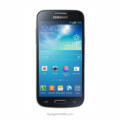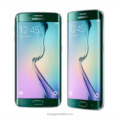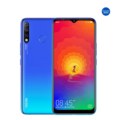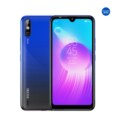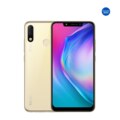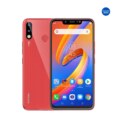

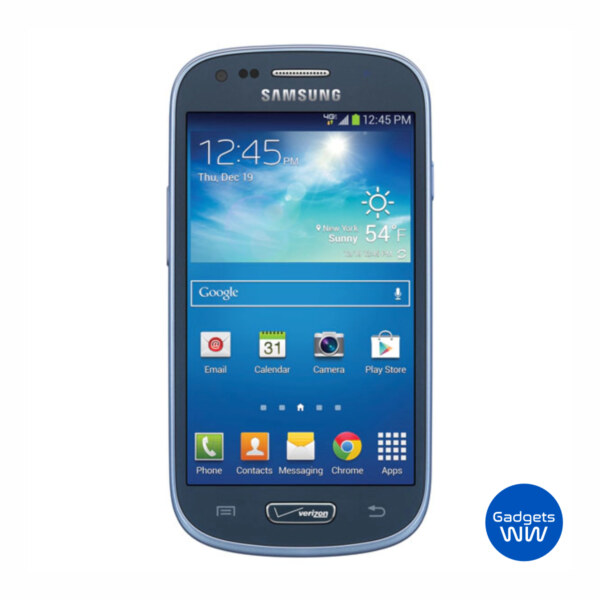
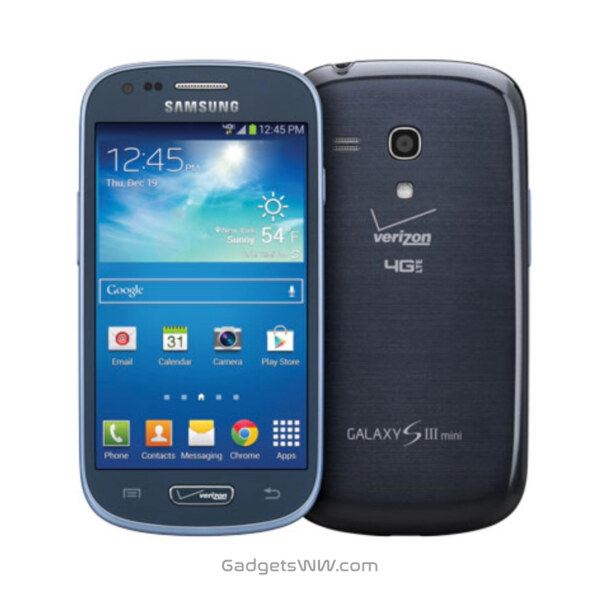
Samsung I8190 Galaxy S III mini
-
Display: 4.0" (480x800 pixels)
-
Processor: Dual-core 1.0 GHz NovaThor U8420
-
Rear Camera: 5 MP
-
Selfie Camera: VGA
-
RAM: 1GB
-
Storage: 8GB / 16GB
-
OS: Android 4.1
-
Battery: 1500mAh
Samsung Galaxy S III Mini Review: Compact Design, Familiar Galaxy Experience
When Samsung unveiled the Galaxy S III earlier this year, it quickly became one of the best Android phones of 2012. But Samsung also recognized that not everyone wants a big 4.8-inch device or can afford a premium flagship. To meet the needs of those users, Samsung introduced the Samsung Galaxy S III Mini (I8190) in October 2012, a smaller, more affordable smartphone that looks and feels like the Galaxy S III, but with hardware tailored for the mid-range market.
In this review, we’ll take a deep dive into the design, specs, performance, features, and comparisons of the Galaxy S III Mini to help you decide if this compact Android phone is the right choice for you.
Design: Small Size, Same Galaxy Look
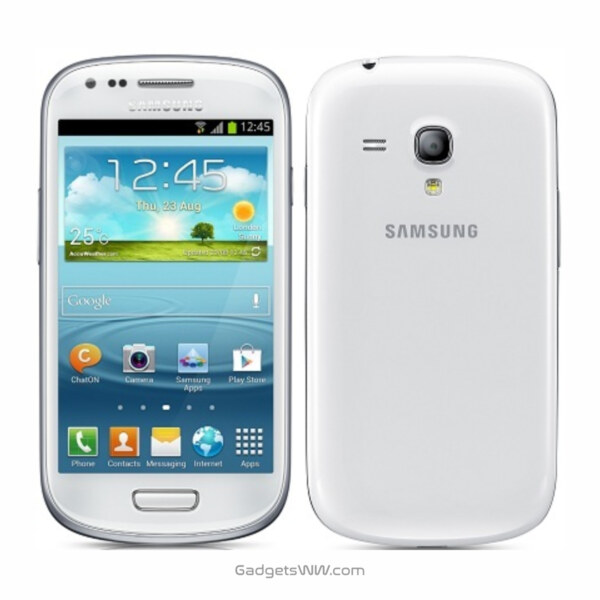
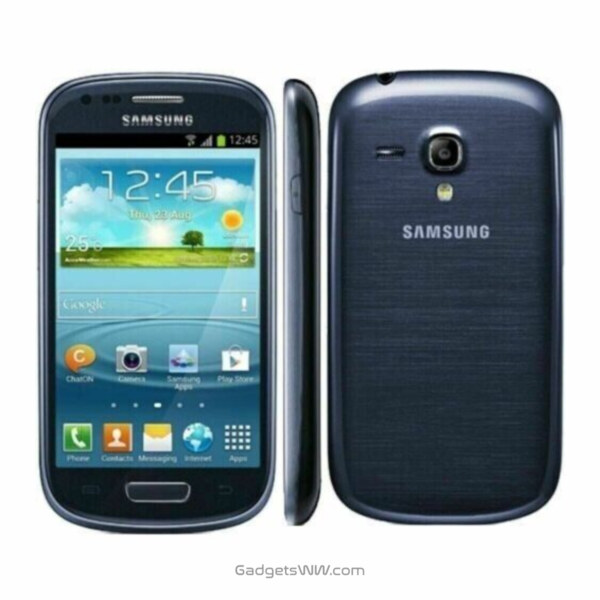
Samsung calls the Galaxy S III Mini “inspired by nature,” just like the flagship. It’s easy to see why: the phone shares the same rounded curves, pebble-like design, and glossy polycarbonate finish as its bigger sibling.
The smaller 4.0-inch form factor makes it more pocket-friendly and easier to use with one hand, especially at a time when smartphone screens are rapidly getting larger. At 121.6 × 63 × 9.9 mm and weighing 111 grams, the Galaxy S III Mini is comfortable to hold, light in the pocket, and suitable for users who prefer compact smartphones.
Available in Marble White and Pebble Blue, the phone looks nearly identical to the full Galaxy S III, making it feel like a miniaturized flagship.
Display: 4.0-Inch Super AMOLED
The Samsung Galaxy S III Mini features a 4.0-inch Super AMOLED display with a resolution of 800 × 480 pixels (WVGA). While it doesn’t offer HD like the Galaxy S III’s 720p display, it still delivers vibrant colors, deep blacks, and wide viewing angles.
At 233 pixels per inch (ppi), it’s not as sharp as higher-end phones, but it’s more than enough for browsing, social media, messaging, and casual video viewing. For many users, the balance of size and usability makes the S III Mini a practical choice.
Samsung Galaxy S III Mini Specs
Here’s a detailed look at what’s inside the Samsung I8190 Galaxy S III Mini:
- Display:0-inch Super AMOLED, 800 × 480 pixels (WVGA)
- Processor: Dual-core 1.0 GHz NovaThor U8420
- GPU: Mali-400
- RAM: 1 GB
- Storage: 8/16 GB internal, expandable via microSD up to 32 GB
- Camera: 5 MP rear camera (720p HD video), VGA front camera
- Battery: 1500 mAh removable
- Operating System: Android 4.1 Jelly Bean with TouchWiz Nature UX
- Connectivity: 3G (HSPA), Wi-Fi b/g/n, Bluetooth 4.0, GPS, NFC (optional model)
Clearly, Samsung designed the S III Mini with affordability and accessibility in mind rather than flagship-level power.
Performance: Everyday Smoothness
The Galaxy S III Mini is powered by a dual-core 1.0 GHz NovaThor processor and 1 GB of RAM, making it well-suited for everyday smartphone tasks. Apps open quickly, web browsing is smooth, and multitasking works well for light usage.
Thanks to Android 4.1 Jelly Bean, users benefit from Project Butter, which makes animations and UI transitions more fluid than earlier Android versions. While it won’t compete with quad-core flagships like the Galaxy S III or HTC One X, the Mini performs reliably for casual users.
Camera: Simple but Reliable
Samsung equipped the Galaxy S III Mini with a 5 MP rear camera capable of shooting 720p HD video. The camera app includes handy features like:
- Panorama mode for wide shots
- Smile detection
- Scene modes for optimized shooting
In good lighting conditions, the camera performs decently, producing clear, vibrant images. Low-light performance is limited, but that’s expected for a mid-range phone.
The VGA front camera is basic, designed primarily for video calls rather than selfies.
Software: Galaxy Features at a Lower Price
What makes the Galaxy S III Mini stand out is that Samsung didn’t strip away all the software features that made the Galaxy S III popular. Despite its mid-range hardware, the Mini runs Android 4.1 Jelly Bean with Samsung’s TouchWiz Nature UX, offering features such as:
- Smart Stay: Screen stays on while you’re looking at it.
- Direct Call: Call a contact by lifting the phone to your ear while viewing their details.
- Smart Alert: The phone vibrates when picked up if there are missed calls or messages.
- S Voice: Samsung’s virtual assistant, similar to Apple’s Siri.
- Google Now integration: Providing proactive information like weather, traffic, and calendar events.
These features make the Galaxy S III Mini feel more advanced than many other mid-range Android phones of 2012.
Battery Life
The Galaxy S III Mini includes a 1500 mAh removable battery. On paper, this might seem small, but the lower-resolution display and efficient dual-core processor mean the phone can last a full day with moderate use. Heavy users will likely need a nightly charge, but the removable battery design allows easy swaps for those who want extended usage.
Samsung Galaxy S III Mini vs Samsung Galaxy S III
To understand the S III Mini’s place in Samsung’s lineup, let’s compare it to the flagship Galaxy S III:
| Feature | Galaxy S III Mini | Galaxy S III |
| Display | 4.0″ WVGA (800×480) | 4.8″ HD Super AMOLED (1280×720) |
| Processor | Dual-core 1.0 GHz | Quad-core 1.4 GHz |
| Rear Camera | 5 MP (720p video) | 8 MP (1080p video) |
| Front Camera | VGA | 1.9 MP (720p video) |
| Battery | 1500 mAh | 2100 mAh |
| Storage | 8/16 GB + microSD | 16/32/64 GB + microSD |
| Software Features | Smart Stay, S Voice, Direct Call | Full suite (Pop-up Play, S Beam, Smart Stay, etc.) |
The S III Mini isn’t meant to compete with the flagship but instead provides a budget-friendly alternative that maintains the Galaxy family look and feel.
Samsung Galaxy S III Mini vs Competitors
vs iPhone 4S
- Screen:0-inch Super AMOLED vs 3.5-inch Retina Display
- Performance: Dual-core (both) but the iPhone benefits from iOS optimization
- Design: Both compact, but Apple uses glass and metal, while Samsung opts for polycarbonate
- Price: The S III Mini is generally more affordable
vs HTC One V
- Both phones target the mid-range market.
- The Galaxy S III Mini offers more software features, while the One V has a more premium unibody design.
Why the Galaxy S III Mini Matters
The Galaxy S III Mini shows Samsung’s strategy to dominate every segment of the smartphone market. Not everyone wants a large phone or can spend flagship-level money. By introducing a smaller, more affordable version of its best-selling smartphone, Samsung ensures that more users can enjoy the Galaxy brand.
This move also positions Samsung to compete with Apple’s iPhone 4/4S, appealing to users who value compact size and brand recognition.
Pros and Cons
Pros:
- Compact and lightweight design
- Super AMOLED display with vibrant colors
- Familiar Galaxy S III design and software features
- Expandable storage and removable battery
- Affordable alternative to the flagship
Cons:
- Lower resolution screen compared to flagship
- Modest camera performance
- Dual-core processor may feel limited for heavy multitasking
- Plastic build feels less premium than rivals
Who Should Buy the Galaxy S III Mini?
The Samsung Galaxy S III Mini (I8190) is not built to impress spec enthusiasts. Instead, it’s aimed at casual users who want a compact smartphone with modern features at a reasonable price. If you like the design and features of the Galaxy S III but find it too big or too expensive, the Mini is an excellent alternative.
For heavy gamers or those who want cutting-edge performance, the Galaxy S III or HTC One X are better options. But for everyday calls, messaging, social media, and light apps, the Galaxy S III Mini is a stylish and reliable choice in late 2012.
Specs
LAUNCH
| Announced | 2012, October. Released 2012, November |
| Availability | Discontinued |
NETWORK
| 2G Bands | GSM 850 / 900 / 1800 / 1900 |
| 3G Bands | HSDPA 900 / 1900 / 2100 |
| Speed | HSPA 14.4/5.76 Mbps |
| Technology | GSM/HSPA |
DESIGN
| Measurements | 121.6 x 63 x 9.9 mm (4.79 x 2.48 x 0.39 in) |
| Weight | 111.5 g (3.92 oz) |
| Build | Glass front, plastic back, plastic frame |
| SIM | Mini-SIM |
DISPLAY
| Type | Super AMOLED |
| Size | 4.0 inches, 45.5 cm2 (~59.4% screen-to-body ratio) |
| Resolution | 480 x 800 pixels, 5:3 ratio (~233 ppi density) |
PLATFORM
| OS | Android 4.1 (Jelly Bean) |
| Chipset | NovaThor U8420 |
| CPU | 1.0 GHz dual-core Cortex-A9 |
| GPU | Mali-400 |
MEMORY
| Card Slot | microSDHC (dedicated slot) |
| Internal | 8GB 1GB RAM, 16GB 1GB RAM |
REAR CAMERA
| Single | 5 MP, f/2.6, AF |
| Features | LED flash, panorama |
| Video | 720p@30fps |
SELFIE CAMERA
| Single | VGA |
SOUND
| Loudspeaker | Yes |
| 3.5mm Jack | Yes |
COMMUNICATION
| WLAN | Wi-Fi 802.11 a/b/g/n, dual-band, Wi-Fi Direct, DLNA, hotspot |
| Bluetooth | 4.0, A2DP, EDR, LE, aptX |
| Positioning | GPS, GLONASS |
| NFC | Yes (Market dependent) |
| Radio | Stereo FM radio, RDS |
| USB | microUSB 2.0 |
FEATURES
| Sensors | Accelerometer, gyro, proximity, compass |
BATTERY
| Kind | Li-Ion 1500 mAh, removable |
| Standby | Up to 450 h (2G) / Up to 430 h (3G) |
| Talktime | Up to 14 h 10 min (2G) / Up to 7 h 10 min (3G) |
OTHERS
| Colors | White, Blue, Titan Gray, Amber Brown, Garnet Red, Onyx Black |
| Models | GT-I8190, GT-I8190N, GT-I8190L, SM-G730A, SM-G730W8 |
| SAR | 1.03 W/kg (head) 1.28 W/kg (body) |
| SAR EU | 0.52 W/kg (head) |
PRICE
| UK | Around £130 |
EU LABEL
Reviews
Disclaimer Note
The reviews, opinions, and information shared on this blog are based on personal experiences, research, and available product details at the time of writing. While we strive to provide accurate and up-to-date information, we cannot guarantee that all specifications, prices, or features remain current.