
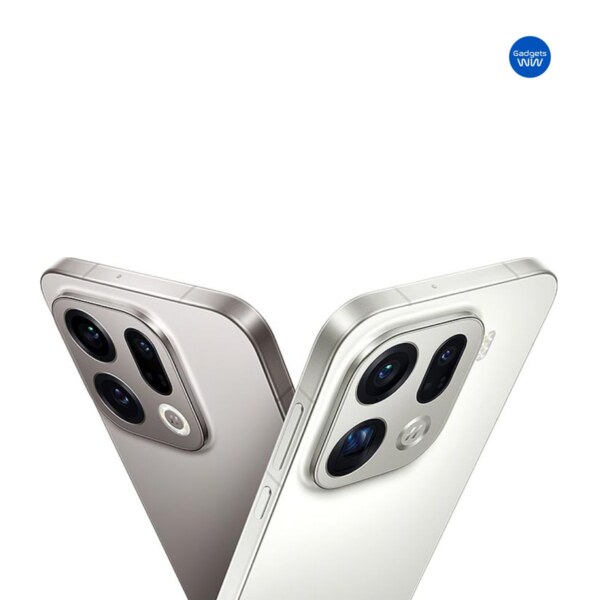
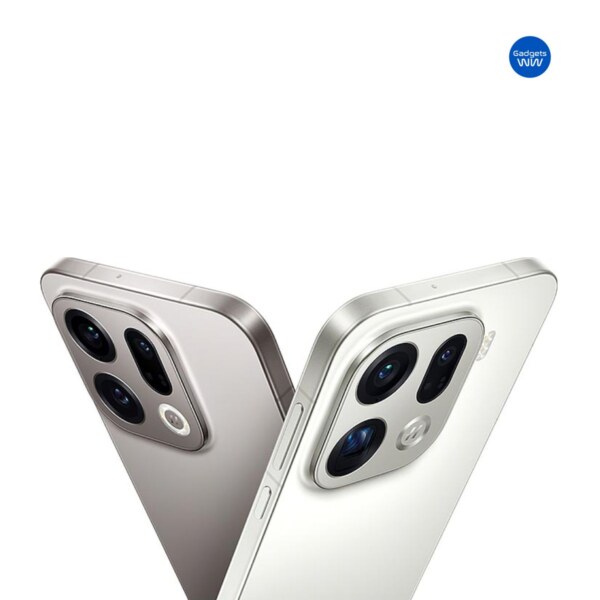
Oppo Find X9 Pro


-
Display: 6.78" (1272x2772 pixels)
-
Processor: Dimensity 9500
-
Rear Camera: 200MP
-
RAM: 12/16GB
-
Storage: 256GB/512GB/1TB
-
OS: Android 16, up to 5 major upgrades
-
Battery: 7500mAh
PROS
- Outstanding Camera System: 200 MP telephoto with Hasselblad tuning delivers pro-level photography.
- Large, Bright Display: 6.78″ LTPO AMOLED with 120 Hz and HDR support.
- Massive Battery & Fast Charging: Long battery life with both wired and wireless fast charging.
- Premium Build & Durability: Gorilla Glass Victus 2 and robust metal frame.
- Future-Ready Performance: Dimensity 9500 with up to 16 GB RAM.
- Long Software Support: Android 16 with planned major updates.
CONS
- Pricey Flagship: Premium price tag that may not suit every budget.
- No Headphone Jack: Some users may miss this.
- Camera Processing Needs Tweaks: Some reviews mention processing could improve.
Oppo Find X9 Pro (2025) Review: A Premium Flagship That Raises the Bar
The Oppo Find X9 Pro is one of the most anticipated flagship smartphones of 2025. Positioned as Oppo’s elite offering, this handset pushes the boundaries for camera performance, display quality, and long-lasting battery life, all while running the latest Android 16-based ColorOS 16. Whether you’re a power user, photography enthusiast, or someone who just wants a future-ready phone, the Find X9 Pro promises to deliver.
In this review, we’ll break down every aspect of the phone, compare it to expectations set by rivals, and give you a clear look at whether it’s worth your attention and money in 2025.
Design & Build: Premium by Every Measure
The Oppo Find X9 Pro feels like a premium flagship the moment you hold it. With Gorilla Glass protective layering on both sides and a sturdy aluminum frame, the phone strikes a balance between elegance and durability. Despite packing a massive 7,500 mAh battery, it manages a solid ergonomic feel without being overly bulky.
- The flat 6.78-inch LTPO AMOLED display is edged with minimal bezels and protected by Gorilla Glass Victus 2 for added scratch resistance and toughness.
- Weight: around 224 g, feels solid but not too heavy.
- Color options include Silk White, Titanium Charcoal, and Velvet Red.
This refined build quality places the Find X9 Pro right at home with other premium devices in 2025, rivaling contemporary flagships in aesthetics and feel.
Display: True Visual Immersion
The display on the Oppo Find X9 Pro is one of its standout features:
- 6.78-inch LTPO AMOLED panel
- 120 Hz refresh rate for ultra-smooth scrolling and animations
- HDR support including Dolby Vision and HDR10+
- Peak brightness of up to 3600 nits for excellent outdoor visibility
This combo means excellent contrast, deep blacks, vibrant colors, and fluid motion whether you’re gaming, streaming, or browsing social media. If you watch a lot of high-dynamic-range content, this screen won’t disappoint.
Performance: Power and Precision
Under the hood, the Find X9 Pro is powered by the MediaTek Dimensity 9500 (3 nm) chipset, paired with up to 16 GB RAM and up to 1 TB of UFS 4.1 storage.
This hardware setup places the phone squarely in flagship-tier performance for 2025:
- Heavy multitasking with zero lag
- Smooth gaming on demanding titles
- Fast app launches and seamless navigation
Whether you’re editing videos, retouching photos, or juggling multiple apps, the performance is consistently snappy thanks to tight optimization between the SoC, RAM, storage, and ColorOS 16.
Camera System: A Major Leap
Perhaps the most talked-about aspect of the Find X9 Pro is its camera system. Oppo has doubled down on both hardware and software enhancements:
Rear Camera System
- 50 MP main lens (wide)
- 200 MP periscope telephoto, rare on smartphones and excellent for zoom shots
- 50 MP ultrawide for expansive group and landscape shots
- Hasselblad-tuned color profiles (for natural tones and richer photos)
Front Camera
- 50 MP selfie camera, perfect for high-resolution selfies and video calls
Camera Strengths
- Professional-grade zoom: The 200 MP telephoto lens offers impressive optical and hybrid zoom.
- Versatile shooting modes: Night mode, portrait, AI enhancements, and HDR video recording.
- Video capabilities: Smooth 4K and optimized AI features for dynamic scenes.
Some reviewers note that while the hardware is outstanding, camera processing might need software refinement to fully maximize detail at high zoom levels. Even with that caveat, the camera package is among the best in smartphones released in 2025.
Battery Life & Charging: Long-Lasting Power
A massive 7,500 mAh battery sits at the core of the Find X9 Pro, one of the largest capacities seen in flagship phones this year. Combined with ColorOS power optimization, this translates to:
- Full day of heavy use without breaking a sweat
- Up to two days of moderate use
- Supports 80 W wired fast charging and 50 W wireless charging
If you travel a lot or rely heavily on mobile productivity, this battery performance feels truly liberating compared to many competitors.
Connectivity & Software
Connectivity is solid across the board:
- 5G support for future-proof network speeds
- Wi-Fi 7, NFC, Bluetooth 6.0, and USB-C 3.2 support
- ColorOS 16 based on Android 16 with five major promised updates, this means long-term software longevity.
ColorOS 16 continues Oppo’s tradition of offering a feature-rich software experience with AI enhancements, customizable UI, and productivity tools.
Audio & Additional Features
The Find X9 Pro doesn’t leave audio performance behind:
- Stereo speakers, loud and clear for media playback
- No 3.5 mm headphone jack, which may frustrate some users
- IP68/69 water and dust resistance, excellent durability rating
Fingerprint security comes via an under-display sensor, and face unlock options are available for convenience. Wireless reverse charging is also supported, handy for topping up accessories on the go.
Pricing at Launch (2025)
Oppo’s international pricing varied by region, but representative launch prices for the Find X9 Pro are approximately:
| Region | Approx. Launch Price |
| Nigeria (₦) | ₦590,000 – ₦780,000 (varies by storage) |
| United States (USD) | ~$1,240 – $1,300 (based on global pricing estimates) |
| United Kingdom (GBP) | ~£989 – £1,099 (market-based estimates) |
| India (INR) | ₹109,999 for the standard configuration |
These figures reflect flagship pricing, not cheap, but competitive with other top-tier phones released in late 2025.
Pros and Cons
Here’s a clear breakdown of this phone’s strengths and weaknesses:
Pros
- Outstanding Camera System: 200 MP telephoto with Hasselblad tuning delivers pro-level photography.
- Large, Bright Display: 6.78″ LTPO AMOLED with 120 Hz and HDR support.
- Massive Battery & Fast Charging: Long battery life with both wired and wireless fast charging.
- Premium Build & Durability: Gorilla Glass Victus 2 and robust metal frame.
- Future-Ready Performance: Dimensity 9500 with up to 16 GB RAM.
- Long Software Support: Android 16 with planned major updates.
Cons
- Pricey Flagship: Premium price tag that may not suit every budget.
- No Headphone Jack: Some users may miss this.
- Camera Processing Needs Tweaks: Some reviews mention processing could improve.
Who Is the Oppo Find X9 Pro Best For?
This phone is ideal for:
Users who want top-tier photography tools on a mobile
Power users and multitaskers
Those who value battery life and charging speed
People who want long-term software support
If you’re upgrading from a 2022–2023 flagship, you’ll feel a noticeable jump in nearly every category.
Conclusion
The Oppo Find X9 Pro sets a high bar in 2025’s flagship smartphone landscape. With a phenomenal camera system, gorgeous display, long-lasting battery, and robust performance, it represents one of Oppo’s most complete packages yet. While its pricing is premium, and a few minor software tweaks could help photography processing, this device remains a top competitor against other flagship giants.
Whether you’re a mobile photographer, a tech enthusiast, or someone seeking a long-lasting flagship device, the Oppo Find X9 Pro is a compelling choice.
Specs
LAUNCH
| Announced | 2025, October 16 |
| Availability | Available. Released 2025, October 22 |
NETWORK
| 2G Bands | GSM 850 / 900 / 1800 / 1900 |
| 3G Bands | HSDPA 800 / 850 / 900 / 1700(AWS) / 1900 / 2100 - International, China HSDPA 900 / 2100 - India |
| 4G Bands | 1, 2, 3, 4, 5, 7, 8, 12, 13, 17, 18, 19, 20, 25, 26, 28, 32, 38, 39, 40, 41, 42, 48, 66, 71 - International 1, 2, 3, 4, 5, 7, 8, 12, 17, 18, 19, 20, 25, 26, 28, 34, 38, 39, 40, 41, 42, 43, 48, 66 - China 1, 3, 5, 8, 40 - India |
| 5G Bands | 1, 2, 3, 5, 7, 8, 12, 20, 25, 26, 28, 38, 40, 41, 48, 66, 71, 75, 76, 77, 78, 79 SA/NSA - International 1, 2, 3, 5, 7, 8, 12, 18, 20, 25, 26, 28, 34, 38, 39, 40, 41, 48, 66, 77, 78, 79 SA/NSA - China 1, 3, 5, 8, 40 SA/NSA - India |
| Speed | HSPA, LTE, 5G |
| Technology | GSM / HSPA / LTE / 5G |
DESIGN
| Measurements | 161.3 x 76.5 x 8.3 mm (6.35 x 3.01 x 0.33 in) |
| Weight | 224 g (7.90 oz) |
| Build | Glass front (Gorilla Glass Victus 2), glass back, aluminum frame |
| SIM | · Nano-SIM + eSIM · Nano-SIM + Nano-SIM IP68/IP69 dust tight and water resistant (high pressure water jets; immersible up to 1.5m for 30 min) |
DISPLAY
| Type | LTPO AMOLED, 1B colors, 120Hz, 2160Hz PWM, Dolby Vision, HDR10+, HDR Vivid, 800 nits (typ), 1800 nits (HBM), 3600 nits (peak) |
| Size | 6.78 inches, 112.4 cm2 (~91.1% screen-to-body ratio) |
| Resolution | 1272 x 2772 pixels, 19.5:9 ratio (~450 ppi density) |
| Protection | Corning Gorilla Glass Victus 2, Mohs level 5 Ultra HDR image support |
PLATFORM
| OS | Android 16, up to 5 major Android upgrades, ColorOS 16 |
| Chipset | Mediatek Dimensity 9500 (3 nm) |
| CPU | Octa-core (1x4.21 GHz C1-Ultra & 3x3.5 GHz C1-Premium & 4x2.7 GHz C1-Pro) |
| GPU | Arm G1-Ultra |
MEMORY
| Card Slot | No |
| Internal | 256GB 12GB RAM, 512GB 12GB RAM, 512GB 16GB RAM, 1TB 16GB RAM UFS 4.1 |
REAR CAMERA
| Triple | 50 MP, f/1.5, 23mm (wide), 1/1.28", 1.22µm, multi-directional PDAF, OIS 200 MP, f/2.1, 70mm (periscope telephoto), 1/1.56", 0.5µm, 3x optical zoom, multi-directional PDAF, OIS 50 MP, f/2.0, 15mm, 120˚ (ultrawide), 1/2.76", 0.64µm, multi-directional PDAF |
| Features | Laser AF, color spectrum sensor, Hasselblad Color Calibration, LED flash, HDR, panorama, LUT preview |
| Video | 4K@30/60/120fps, 1080p@30/60/240fps; gyro-EIS; HDR, 10‑bit video, Dolby Vision, LOG |
SELFIE CAMERA
| Single | 50 MP, f/2.0, 21mm (wide), 1/2.76", 0.64µm, PDAF |
| Features | Panorama |
| Video | 4K@30/60fps, 1080p@30/60fps, gyro-EIS |
SOUND
| Loudspeaker | Yes, with stereo speakers |
| 3.5mm Jack | No |
COMMUNICATION
| WLAN | Wi-Fi 802.11 a/b/g/n/ac/6/7, dual-band or tri-band, Wi-Fi Direct |
| Bluetooth | 6.0, A2DP, LE, aptX HD, LHDC 5 |
| Positioning | GPS (L1+L5), BDS (B1I+B1c+B2a+B2b), GALILEO (E1+E5a+E5b), QZSS (L1+L5), GLONASS, NavIC (L5) |
| NFC | Yes |
| Radio | No |
| Infrared Port | Yes |
| USB | USB Type-C 3.2, OTG |
FEATURES
| Sensors | Fingerprint (under display, ultrasonic), accelerometer, gyro, proximity, compass, barometer Satellite connectivity support (1TB 16GB RAM model only) |
BATTERY
| Kind | Si/C Li-Ion 7500 mAh |
| Charging | 80W wired, 80W UFCS, 55W PPS, 11.7W PD 50W wireless 10W reverse wireless |
OTHERS
| Colors | Silk White, Titanium Charcoal, Velvet Red |
| Models | CPH2791, PLG110 |
PRICE
| Nigeria | ₦590,000 – ₦780,000 |
| UK | £989 – £1,099 |
| USA | $1,240 – $1,300 |
| India | ₹109,999 |
EU LABEL
Reviews
Disclaimer Note
The reviews, opinions, and information shared on this blog are based on personal experiences, research, and available product details at the time of writing. While we strive to provide accurate and up-to-date information, we cannot guarantee that all specifications, prices, or features remain current.