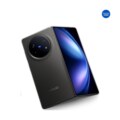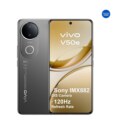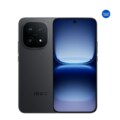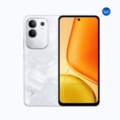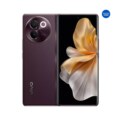

Vivo V40 Pro
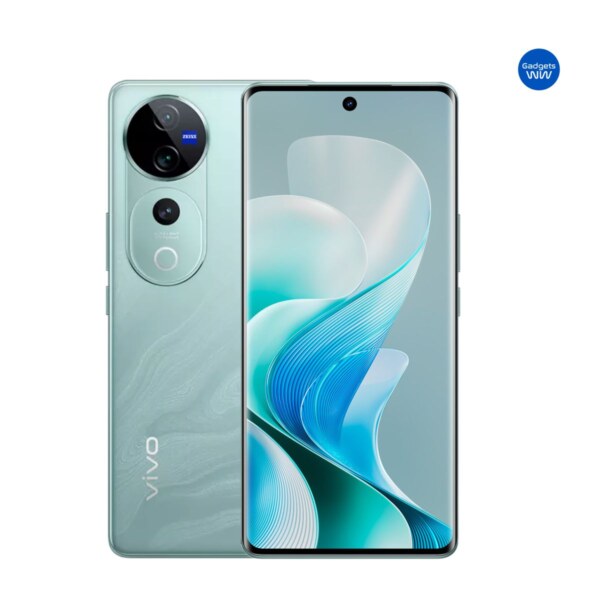
-
Display: 6.78" (1260x2800 pixels)
-
Processor: Dimensity 9200+
-
Rear Camera: 50MP
-
RAM: 8GB / 12GB
-
Storage: 256GB / 512GB
-
OS: Android 14, Funtouch 14
-
Battery: 5500mAh
PROS
- Excellent triple-50 MP camera system (main + ultra-wide + telephoto) with Zeiss optics.
- Strong performance thanks to Dimensity 9200+ chipset + 8/12 GB RAM.
- Smooth high refresh rate display (6.78″, AMOLED, 120Hz) + premium build.
- Long battery life + 80W fast wired charging.
- Premium design, IP68 rating in many markets.
- Good selfie camera (50 MP) and overall well-rounded feature set.
CONS
- No wireless charging (or it’s not clearly widely supported globally).
- Digital zoom beyond optical may yield diminishing returns.
- Slightly premium price compared to mid-tier alternatives.
- Curved edges may cause accidental touches for some users.
- Software updates promise may vary by region.
- While strong, battery and charging features not at “ultra” flagship extreme (e.g., 120W+ charging, 6000mAh+ battery) in some competitor devices.
In-Depth Review: vivo V40 Pro
The Vivo V40 Pro is the kind of smartphone that aims to balance flagship-level camera and performance credentials with refined user experience. In this review, we’ll explore its design, display, performance, cameras, battery & charging, software, and overall verdict — with a detailed list of pros and cons. At the end, you’ll find our SEO-keyword section with primary, secondary and long-tail keywords.
Design & Build Quality
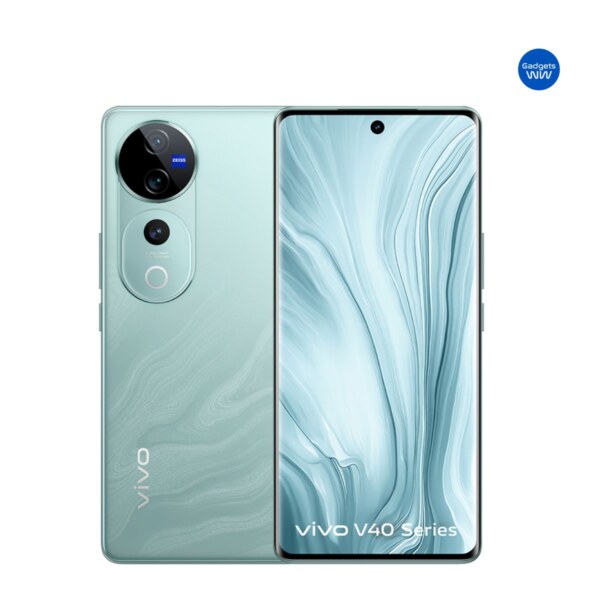
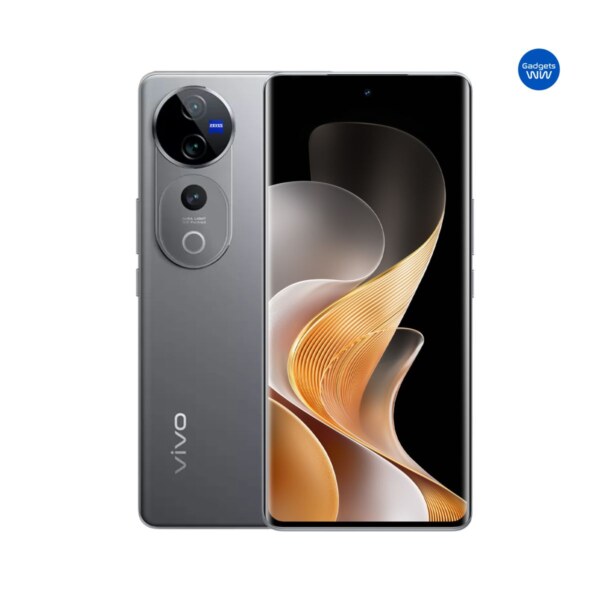
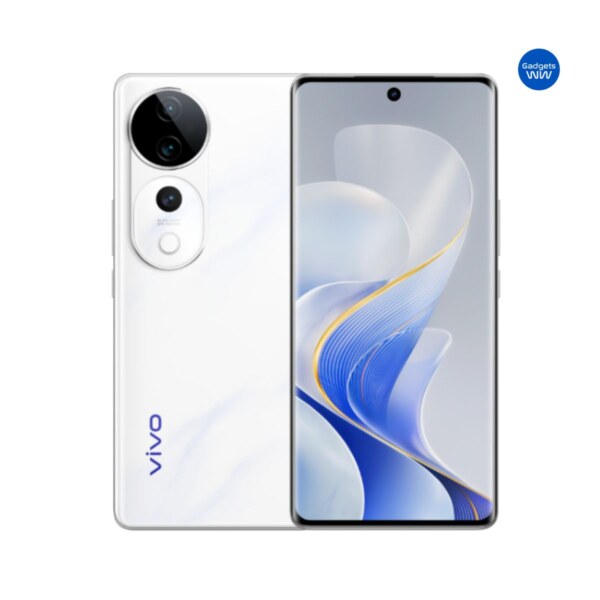
The V40 Pro adopts a premium aesthetic. According to its specs, it measures about 164.36 × 75.10 × 7.58 mm and weighs around 192 g.
It features a glass (or glass-like) back, curved edges, and a visibly sleek profile. The camera module is robust yet well-integrated into the rear.
The feel in the hand is comfortable; at ~7.6 mm thickness it’s reasonably slim for what it packs. The curved display edges add a premium touch. One thing to highlight is the rear design: the triple-camera setup is prominent, so it sits slightly wobbly on a flat surface if the case is very thin.
Build quality appears solid: the phone boasts IP68 water/dust resistance (as per some listings) which is rare at this level.
Verdict on design: The V40 Pro nails the premium look and feel, gives a modern aesthetic and solid build for someone who cares about style as much as specs.
Display
The smartphone sports a 6.78-inch AMOLED panel, with resolution 1260 × 2800 pixels.
It supports a 120 Hz refresh rate, which makes for smoother scrolling and animations.
Peak brightness is very good, some sources mention up to around 4,500 nits.
All in all, for media consumption, gaming or everyday use, the display hits the right notes: sharp, smooth, vibrant. The curved edges enhance the visual immersion, but can also mean slightly higher accidental touches if you use it single-handed.
One thing to watch: while many flagship phones go higher in brightness or support LTPO variable refresh for extra battery efficiency, the V40 Pro’s specs are competitive but not ultra-top tier.
Performance & Hardware
Under the hood the V40 Pro is equipped with the MediaTek Dimensity 9200 Plus (4nm) chipset.
Configurations of 8 GB or 12 GB RAM and storage options of 256 GB or 512 GB are available.
In benchmark testing, it scores very well for its class, for example, one site listed roughly 1.5 million on AnTuTu for certain versions.
In practical use:
- App opening and multitasking? Smooth and fast.
- Gaming? It handles demanding titles well, with high-end visuals and stable frame-rates (though not necessarily top-of-the-market ultra extremes).
- Thermals? Some heating under heavy load was reported (common with high-end SoCs).
Verdict on performance: For most users, this will feel extremely capable and “future-proof” for a few years. Power users will be satisfied, and casual users will have plenty of headroom.
Cameras
Arguably one of the standout features of the V40 Pro is its camera system.
Rear cameras:
- 50 MP main camera (Sony IMX921 sensor) with OIS.
- 50 MP ultra-wide angle.
- 50 MP telephoto (2× optical zoom, up to 50× digital) with OIS.
Zeiss optics are co-branded, adding credibility to image-quality claims.
Front camera:
- 50 MP selfie camera.
Camera performance (practical highlights):
- The main sensor captures detailed imagery, strong colours, good dynamic range.
- Ultra-wide allows more expansive scenes with good fidelity (though as always, ultra-wide sensors tend to show slight softness vs main).
- Telephoto is a nice bonus in this category: 2× optical gives meaningful zoom without quality loss, and up to 50× digital is less likely to be outstanding but adds flexibility.
- Selfies are very strong given 50 MP resolution, good for social media, vlogging.
- Video recording: 4K @30fps on rear, supports OIS, decent stabilisation.
Caveats:
- Under low-light, while good, may not match ultra-premium devices (that cost significantly more).
- Digital zoom past 2× optical will inevitably show softness/noise.
- Software optimisation is key, Vivo’s Funtouch OS handles it well, but in some regions tuning could be better.
Verdict on cameras: This is one of the strongest aspects of the phone. If you care about photography, the V40 Pro delivers excellent value and quality.
Battery, Charging & Connectivity
Battery: The V40 Pro includes a 5500 mAh battery.
Charging: Supports 80W wired fast charging.
In real-world use:
- A full day of heavy use (gaming, streaming, camera) is comfortable.
- Moderate use easily yields ~1.5 days.
- Fast charging means you can top up quickly if needed.
- However, no widely-advertised wireless charging or extremely high wattage (e.g., 100 W+) – if you frequently use wireless or need ultra-fast charging you might look elsewhere.
- Backup power consumption is respectable but performance may drop under sustained heavy load (e.g., long gaming sessions).
Connectivity: 5G supported, WiFi 6/7 depending on region, Bluetooth 5.x, NFC in many markets.
Verdict on battery/charging: A strong positive overall, more than sufficient for most users, and fast enough for daily practicalities.
Software & User Experience
The phone runs Android 14 with Vivo’s Funtouch OS layered on top.
The interface is feature-rich: plenty of customization, gesture support, and additional camera/AI features. Vivo typically offers 2 major OS updates and 3-4 years of security patches for such models. (Check your region for exact commitments.)
In day-to-day experience: fluid UI, smooth animations thanks to 120 Hz display, good touch response, minimal lag. The curved edges add nice “wow” feel; however, some users prefer flat display edges to avoid accidental touches.
One minor note: Bloatware (pre-installed apps) may be present depending on market, so you might want to clean up a few apps after setting up.
Who Should Buy & Who Might Want to Wait
Best for:
- Photography enthusiasts who want a strong camera system without paying ultra-flagship price.
- Users who want a premium-looking phone with excellent specs but don’t require ultra-budget cost.
- Everyday power users wanting smooth performance, good battery and modern features.
Might wait if:
- You rely heavily on wireless charging or ultra-fast charging (100 W+).
- You prefer ultra-premium materials (ceramic/metal) or super-high end phones > $1,000.
- You primarily use budget phones and don’t need all high-end features.
Pros & Cons
Pros:
- Excellent triple-50 MP camera system (main + ultra-wide + telephoto) with Zeiss optics.
- Strong performance thanks to Dimensity 9200+ chipset + 8/12 GB RAM.
- Smooth high refresh rate display (6.78″, AMOLED, 120Hz) + premium build.
- Long battery life + 80W fast wired charging.
- Premium design, IP68 rating in many markets.
- Good selfie camera (50 MP) and overall well-rounded feature set.
Cons:
- No wireless charging (or it’s not clearly widely supported globally).
- Digital zoom beyond optical may yield diminishing returns.
- Slightly premium price compared to mid-tier alternatives.
- Curved edges may cause accidental touches for some users.
- Software updates promise may vary by region.
- While strong, battery and charging features not at “ultra” flagship extreme (e.g., 120W+ charging, 6000mAh+ battery) in some competitor devices.
-
Conclusion
In summary, the vivo V40 Pro is a standout choice in its tier. It brings flagship-adjacent specifications, particularly in camera, display and performance, while still offering very good value (depending on your market). For someone in Nigeria (or Port Harcourt) looking for a phone that ticks most boxes and looks the part, this is a compelling candidate. If your budget allows, this device offers top-tier value amongst the 2024/2025 smartphone crop.
Specs
LAUNCH
| Announced | 2024, August 07 |
| Availability | Available. Released 2024, August 23 |
NETWORK
| 2G Bands | GSM 850 / 900 / 1800 / 1900 |
| 3G Bands | HSDPA 850 / 900 / 1700(AWS) / 1900 / 2100 - International HSDPA 850 / 900 / 1900 / 2100 - India |
| 4G Bands | 1, 3, 4, 5, 7, 8, 18, 19, 26, 28, 38, 39, 40, 41 - India |
| 5G Bands | 1, 3, 5, 8, 28, 40, 77, 78 SA/NSA - India |
| Speed | HSPA, LTE, 5G |
| Technology | GSM / HSPA / LTE / 5G |
DESIGN
| Measurements | 164.4 x 75.1 x 7.6 mm (6.47 x 2.96 x 0.30 in) |
| Weight | 192 g (6.77 oz) |
| Build | Glass front, glass back |
| SIM | Nano-SIM + Nano-SIM IP68/IP69 dust tight and water resistant (high pressure water jets; immersible up to 1.5m for 30 min) |
DISPLAY
| Type | AMOLED, 1B colors, HDR10+, 120Hz, 2160Hz PWM, 4500 nits (peak) |
| Size | 6.78 inches, 111.0 cm2 (~89.9% screen-to-body ratio) |
| Resolution | 1260 x 2800 pixels, 20:9 ratio (~453 ppi density) |
| Protection | Schott Xensation Alpha |
PLATFORM
| OS | Android 14, Funtouch 14 |
| Chipset | Mediatek Dimensity 9200+ (4 nm) |
| CPU | Octa-core (1x3.35 GHz Cortex-X3 & 3x3.0 GHz Cortex-A715 & 4x2.0 GHz Cortex-A510) |
| GPU | Immortalis-G715 MC11 |
MEMORY
| Card Slot | No |
| Internal | 256GB 8GB RAM, 256GB 12GB RAM, 512GB 12GB RAM UFS 3.1 |
REAR CAMERA
| Triple | 50 MP, f/1.9, 24mm (wide), 1/1.56", 1.0µm, PDAF, OIS 50 MP, f/1.9, 50mm (telephoto), 1/2.51", 0.64µm, PDAF, OIS, 2x optical zoom 50 MP, f/2.0, 15mm, 119˚ (ultrawide), 1/2.76", 0.64µm, AF |
| Features | Zeiss optics, Ring-LED flash, panorama, HDR |
| Video | 4K@30/60fps, 1080p@30fps, gyro-EIS, OIS |
SELFIE CAMERA
| Single | 50 MP, f/2.0, 21mm (wide), 1/2.76", 0.64µm, AF |
| Features | HDR |
| Video | 4K@30fps, 1080p@30fps |
SOUND
| Loudspeaker | Yes, with stereo speakers |
| 3.5mm Jack | No |
COMMUNICATION
| WLAN | Wi-Fi 802.11 a/b/g/n/ac/6/7, dual-band |
| Bluetooth | 5.3, A2DP, LE |
| Positioning | GPS, GALILEO, GLONASS, QZSS, BDS, NavIC |
| NFC | Yes (market/region dependent) |
| Radio | No |
| USB | USB Type-C 2.0, OTG |
FEATURES
| Sensors | Fingerprint (under display, optical), accelerometer, gyro, proximity, compass |
BATTERY
| Kind | Si/C Li-Ion 5500 mAh |
| Charging | 80W wired, PD Reverse wired |
OTHERS
| Colors | Ganges Blue, Titanium Gray, Moonlight White |
| Models | V2347 |
| SAR | 0.99 W/kg (head) 0.99 W/kg (body) |
PRICE
| Nigeria | ₦955,000 |
| USA | $579 |
| India | ₹ 49,999 |
EU LABEL
Reviews
Disclaimer Note
The reviews, opinions, and information shared on this blog are based on personal experiences, research, and available product details at the time of writing. While we strive to provide accurate and up-to-date information, we cannot guarantee that all specifications, prices, or features remain current.