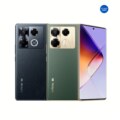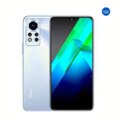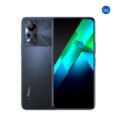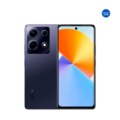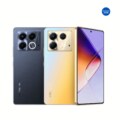

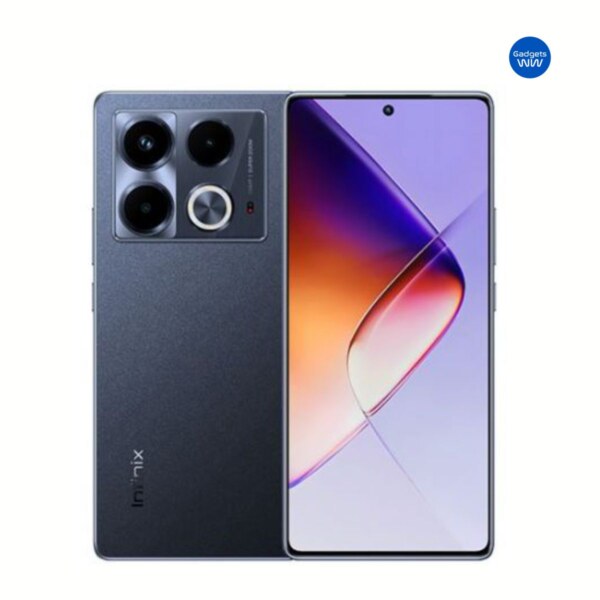
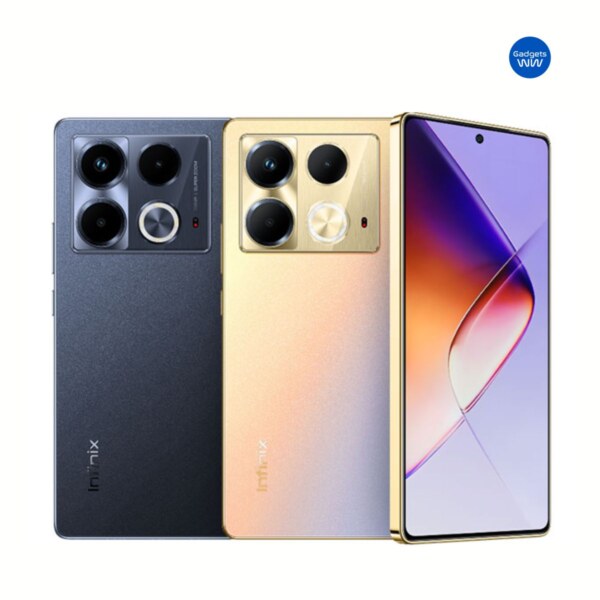
Infinix Note 40
-
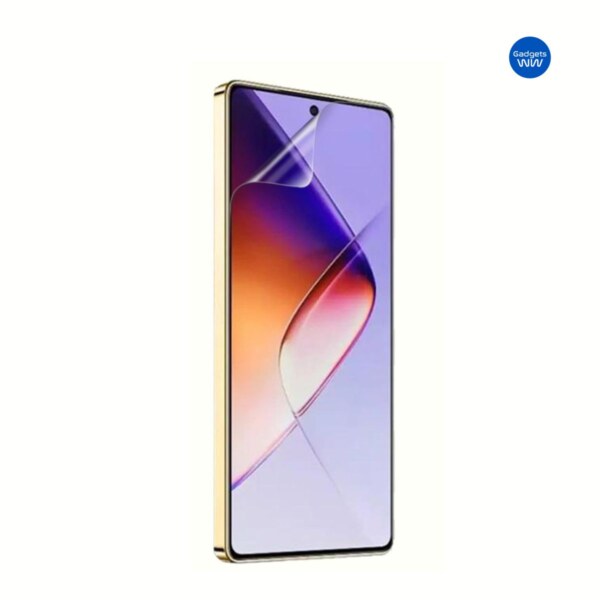
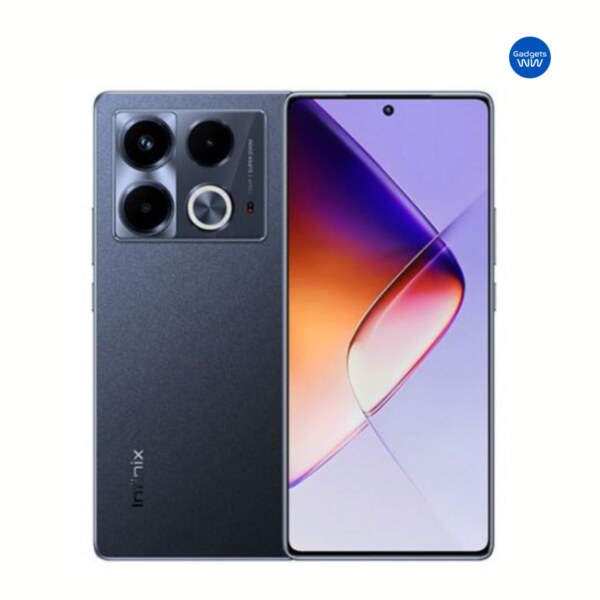
Display: 6.78" (1080x2436 pixels)
-
Processor: Helio G99 Ultimate
-
Rear Camera: 108MP
-
RAM: 8GB
-
Storage: 256GB
-
OS: Android 14, XOS 14
-
Battery: 5000mAh
PROS
- Stunning Display: The 6.78″ AMOLED panel with 120 Hz refresh rate and up to 1300 nits brightness makes everything, from videos to browsing and gaming, look sharp, vivid and smooth.
- Powerful Hardware for Price: The Helio G99 Ultimate + 8 GB RAM + 256 GB UFS 2.2 storage combo gives strong performance for daily tasks, gaming, multitasking, and storage needs.
- Large Battery + Fast Charging: 5000 mAh battery is generous and should deliver a full day (or more) on moderate to heavy use; and fast 45 W charging (plus wireless reverse charging) adds convenience.
- High-Megapixel Camera: The 108 MP main camera offers good versatility, ideal for daylight photography, social media, content creation, and everyday shooting.
- Modern Features & Build: IP54 water/dust resistance, Corning Gorilla Glass, under-display fingerprint sensor, dual SIM, all useful mid-range features that offer a “near-flagship” feel at its price.
- Great Value for Money: Considering its specs and features, the launch price (₦311,900–₦327,900 or US $195) is competitive, making it a strong choice for mid-range buyers.
CONS
- Plastic Frame: While the front glass is premium, the frame is plastic (as with many mid-range phones), which might feel less premium than full-metal or full-glass builds.
- No 5G (on this base variant): Note 40 4G uses LTE, so those expecting next-gen connectivity may be disappointed (though 5G variants exist in the series).
- Average Low-light Camera Performance: The 108 MP works best in good lighting, like many mid-range phones, low-light photos may still fall short of flagship-level camera quality.
- Hefty for Some Users: At 6.78″ and 190g, some users who prefer compact phones might find it a bit large for one-handed use or pocket.
- Software Skin (XOS): While functional, some users find custom skins like XOS a bit bloated compared to “pure” Android, though that depends on personal taste.
In-Depth Review: Infinix Note 40: Is It Worth Buying in 2024?
The Infinix Note 40 hit smartphone stores in March 2024, and created quite some buzz. In this detailed, human-style review, we will dive into what makes the Note 40 stand out (and where it falls short). We’ll also drop its launch price in Naira, Dollars, Pounds, and Rupee, because we know many of you in Nigeria (and beyond) care about those conversions. Plus, we’ll briefly compare it with Infinix Note 30 VIP in terms of design and build, giving you a feel of how far the Note series has come.
What is the Infinix Note 40: Quick Spec Snapshot
- Display: 6.78-inch AMOLED, Full HD+ (1080×2436), 120 Hz refresh rate, up to 1300 nits peak brightness.
- Build & Body: 164.1 × 74.5 × 7.8 mm, 190 g, “bar” smartphone form factor, Corning Gorilla Glass protection, IP54 dust & splash resistance.
- Performance: MediaTek Helio G99 Ultimate Octa-core, 8 GB RAM + 256 GB storage (UFS 2.2) in the main variant.
- Battery: 5000 mAh Li-Po, with fast charging support (45 W wired + optional wireless MagCharge, reverse charging) according to initial spec sheets.
- Camera: Triple rear camera, main sensor 108 MP (wide) + secondary lenses, front selfie camera 32 MP.
- Software: Android 14 with Infinix’s XOS 14 skin (out of the box).
Release Price: What You Paid (At Launch)
When the Note 40 launched, the official price for the 8 GB/256 GB variant in Nigeria was around ₦311,900 – ₦327,900.
Globally, at the time of launch, the price was roughly US $195.
Using approximate 2024 conversion rates (and for context for international buyers), that launch price translates to roughly:
- USD: ≈ US $195 (as listed)
- GBP: ~ £160 (depending on prevailing exchange rate in March 2024)
- INR (Indian Rupee): ~ ₹16,200 (assuming around ₹83–85 per USD at that time)
Note: Currency conversion rates fluctuate often; treat these as rough estimates for 2024 launch-period conversions.
Infinix Note 40 vs Infinix Note 30 VIP: Design & Build Comparison
It’s useful to compare the new Note 40 with its predecessor to appreciate what has changed.
- The Note 30 VIP has a 6.67-inch AMOLED screen, while the Note 40 bumps it up to 6.78 inches, giving a slightly larger viewing area.
- Both models weigh around 190 g, but Note 40’s body is slightly slimmer (7.8 mm thickness vs Note 30 VIP’s 8.2 mm).
- Note 40 upgrades display brightness significantly (1300 nits peak) compared to Note 30 VIP, which had lower peak brightness (around 900 nits), meaning Note 40 is more usable outdoors under bright light.
- Build-wise, Note 40 uses Corning Gorilla Glass and offers IP54 dust/splash resistance; that gives it a more “premium feel” and better longevity compared to Note 30 VIP’s specifications.
In short: Note 40 feels like a careful but solid evolution from Note 30 VIP, a bit larger, brighter, and more polished in build, without sacrificing the portability that Note 30 VIP offered.
What Works (Pros)
- Stunning Display: The 6.78″ AMOLED panel with 120 Hz refresh rate and up to 1300 nits brightness makes everything, from videos to browsing and gaming, look sharp, vivid and smooth.
- Powerful Hardware for Price: The Helio G99 Ultimate + 8 GB RAM + 256 GB UFS 2.2 storage combo gives strong performance for daily tasks, gaming, multitasking, and storage needs.
- Large Battery + Fast Charging: 5000 mAh battery is generous and should deliver a full day (or more) on moderate to heavy use; and fast 45 W charging (plus wireless reverse charging) adds convenience.
- High-Megapixel Camera: The 108 MP main camera offers good versatility, ideal for daylight photography, social media, content creation, and everyday shooting.
- Modern Features & Build: IP54 water/dust resistance, Corning Gorilla Glass, under-display fingerprint sensor, dual SIM, all useful mid-range features that offer a “near-flagship” feel at its price.
- Great Value for Money: Considering its specs and features, the launch price (₦311,900–₦327,900 or US $195) is competitive, making it a strong choice for mid-range buyers.
Where It Falls Short (Cons)
- Plastic Frame: While the front glass is premium, the frame is plastic (as with many mid-range phones), which might feel less premium than full-metal or full-glass builds.
- No 5G (on this base variant): Note 40 4G uses LTE, so those expecting next-gen connectivity may be disappointed (though 5G variants exist in the series).
- Average Low-light Camera Performance: The 108 MP works best in good lighting, like many mid-range phones, low-light photos may still fall short of flagship-level camera quality.
- Hefty for Some Users: At 6.78″ and 190g, some users who prefer compact phones might find it a bit large for one-handed use or pocket.
- Software Skin (XOS): While functional, some users find custom skins like XOS a bit bloated compared to “pure” Android, though that depends on personal taste.
Who Should Buy Infinix Note 40: Target Audience
The Infinix Note 40 is ideal for:
- Young professionals and students who want a smartphone that balances performance, style, and affordability, good for social media, light to mid gaming, streaming, and work apps.
- Content creators on a budget: thanks to the 108 MP camera, large storage and big screen, it’s a nice phone for photography, video creation, social media posting, and editing on the go (at a mid-range price point).
- Everyday users who want longevity: with a big battery, decent build, and modern features, Note 40 can serve reliably for 2–3 years with moderate to heavy use.
- Anyone upgrading from entry-level phones: Note 40 gives a major performance boost and feature upgrade over basic smartphones, without crossing into expensive flagship territory.
Conclusion: Is Infinix Note 40 Worth It?
Yes, the Infinix Note 40 is one of the strongest mid-range smartphones of 2024 from Infinix. Its balance of good display, capable performance, solid battery life, and a high-megapixel camera make it a compelling buy, especially for people in markets like Nigeria where value matters. For many users, it delivers near-flagship features at a fraction of the cost.
If you don’t need 5G, and don’t mind a plastic frame, Note 40 offers excellent value for money. But if you’re after maximum camera performance (especially in low light), 5G, or metal build, there might be better, more expensive alternatives.
Specs
LAUNCH
| Announced | 2024, March 18 |
| Availability | Available. Released 2024, March 19 |
NETWORK
| 2G Bands | GSM 850 / 900 / 1800 / 1900 |
| 3G Bands | HSDPA 850 / 900 / 1700(AWS) / 1900 / 2100 HSDPA 850 / 900 / 2100 |
| 4G Bands | 1, 2, 3, 4, 5, 7, 8, 12, 17, 13, 26, 28, 38, 40, 41, 66 1, 2, 3, 4, 5, 7, 8, 20, 28, 38, 40, 41 1, 3, 5, 8, 38, 40, 41 |
| Speed | HSPA, LTE |
| Technology | GSM / HSPA / LTE |
DESIGN
| Measurements | 164.1 x 74.5 x 7.8 mm (6.46 x 2.93 x 0.31 in) |
| Weight | 190 g (6.70 oz) |
| SIM | Nano-SIM + Nano-SIM IP54 dust protected and water resistant (water splashes) |
DISPLAY
| Type | AMOLED, 120Hz, 1300 nits (peak) |
| Size | 6.78 inches, 109.9 cm2 (~89.9% screen-to-body ratio) |
| Resolution | 1080 x 2436 pixels (~393 ppi density) |
| Protection | Corning Gorilla Glass |
PLATFORM
| OS | Android 14, XOS 14 |
| Chipset | Mediatek Helio G99 Ultimate |
| CPU | Octa-core (2x2.2 GHz Cortex-A76 & 6x2.0 GHz Cortex-A55) |
| GPU | Mali-G57 MC2 |
MEMORY
| Card Slot | Unspecified |
| Internal | 256GB 8GB RAM UFS 2.2 |
REAR CAMERA
| Triple | 108 MP, f/1.9, (wide), 1/1.52", PDAF 2 MP, f/2.4 3rd unspecified camera |
| Features | Quad-LED flash, HDR, panorama |
| Video | 1440p@30fps, 1080p@30/60fps |
SELFIE CAMERA
| Single | 32 MP, f/2.2, (wide), 1/3.1" |
| Video | 1080p@30fps |
SOUND
| Loudspeaker | Yes, with stereo speakers |
| 3.5mm Jack | No Tuned by JBL 24-bit/192kHz Hi-Res audio |
COMMUNICATION
| WLAN | Wi-Fi 802.11 a/b/g/n/ac, dual-band |
| Bluetooth | Yes |
| Positioning | GPS |
| NFC | Yes (market/region dependent) |
| Radio | FM radio |
| USB | USB Type-C 2.0, OTG |
FEATURES
| Sensors | Fingerprint (under display, optical), accelerometer, gyro, proximity, compass |
BATTERY
| Kind | 5000 mAh |
| Charging | 45W wired, 50% in 26 min 20W wireless MagCharge Reverse wired Reverse wireless |
OTHERS
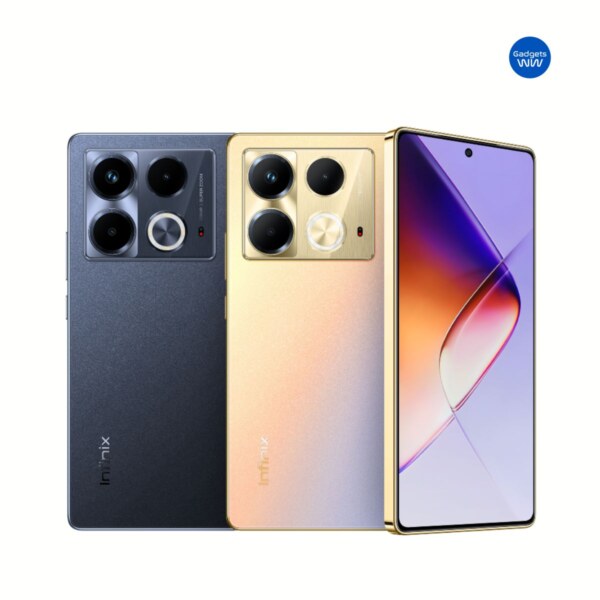
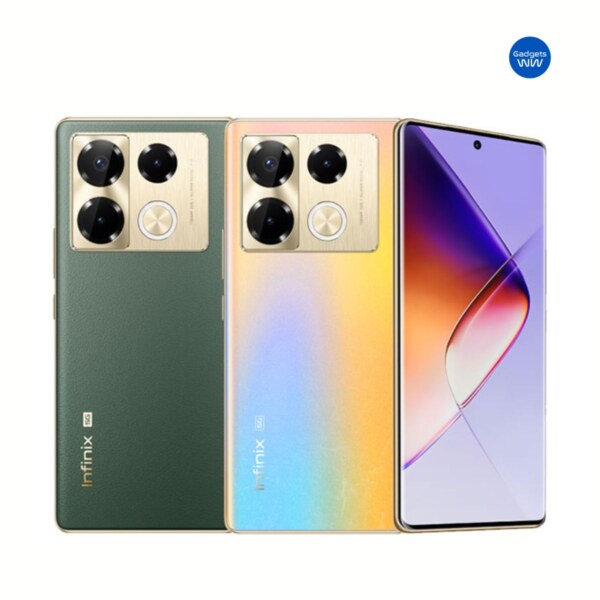
| Colors | Titan Gold, Obsidian Black, Racing Edition |
| Models | X6853 |
PRICE
| Nigeria | ₦327,900 |
| UK | £160 |
| USA | $195 |
| India | ₹16,200 |
EU LABEL
Reviews
Disclaimer Note
The reviews, opinions, and information shared on this blog are based on personal experiences, research, and available product details at the time of writing. While we strive to provide accurate and up-to-date information, we cannot guarantee that all specifications, prices, or features remain current.