
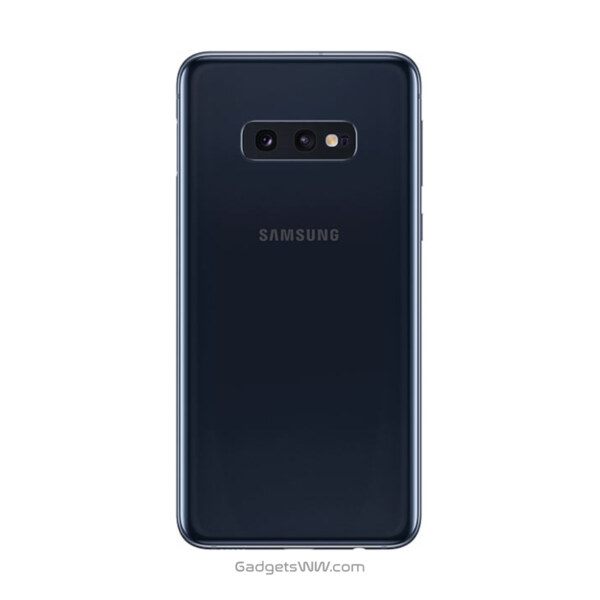
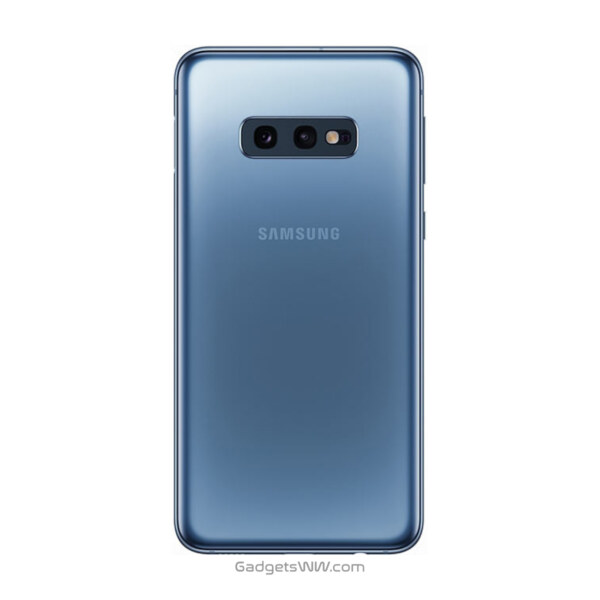
Samsung Galaxy S10e

-
Display: 5.8" (1080x2280 pixels)
-
Processor: Exynos 9820 (8 nm) | Snapdragon 855 (7 nm)
-
Rear Camera: 16MP
-
RAM: 6/8GB
-
Storage: 128GB/256GB
-
OS: Android 9.0, up to Android 12, One UI 4.1
-
Battery: 3100mAh
PROS
- Compact and lightweight design
- Flagship-level performance
- Bright and vibrant Dynamic AMOLED display
- Great camera quality
- Stereo speakers and headphone jack
- Wireless charging and reverse charging
- IP68 resistance
CONS
- Smaller battery than S10 and S10+
- No telephoto lens
- Flat design may feel less premium to some
Samsung Galaxy S10e Review (2019): Compact Power with No Compromise
Introduction: The Compact Flagship Returns
In 2019, Samsung celebrated ten years of the Galaxy S series with three models: the Galaxy S10, the larger S10+, and the Galaxy S10e, a smaller, more affordable version built for users who preferred compact phones without sacrificing performance.
The “e” in S10e stands for essential, and that’s exactly what this device was; a flagship experience trimmed down to the essentials, offering the same processing power, design language, and software intelligence as its bigger siblings.
For anyone tired of oversized phones, the Galaxy S10e was a refreshing return to one-handed usability while still packing all the muscle of a high-end device.
Design and Build: Small Yet Premium
At first glance, the Samsung Galaxy S10e looked nearly identical to the S10 lineup. It shared the same sleek design language; glass on both sides, a polished aluminum frame, and curved edges; but with a flat display instead of curved sides.
- Dimensions: 142.2 × 69.9 × 7.9 mm
- Weight: 150 g
- Materials: Gorilla Glass 5 (front and back), aluminum frame
- Colors: Prism White, Prism Black, Prism Blue, Canary Yellow, Flamingo Pink
The flat screen was not a downgrade; in fact, many users preferred it for its practicality. It reduced accidental touches and offered a more traditional look.
Despite being smaller, the S10e felt every bit as premium as the S10+. Its Canary Yellow color variant especially stood out; bold, vibrant, and youthful, it became the signature look of the compact flagship.
Display: Small Size, Big Quality
Samsung never compromises on display quality, and the Galaxy S10e was proof of that.
- Display Size: 5.8 inches
- Type: Dynamic AMOLED
- Resolution: 2280 × 1080 (Full HD+)
- HDR Support: HDR10+
- Protection: Corning Gorilla Glass 5
Though smaller and lower in resolution than the S10 and S10+, the display was just as impressive. The Dynamic AMOLED panel delivered deep blacks, vivid colors, and excellent brightness even under direct sunlight.
The Infinity-O cutout in the corner housed the front camera, providing a modern aesthetic without resorting to a notch. Whether watching videos, scrolling through social media, or gaming, the display performance of the Galaxy S10e was nothing short of stunning for its size.
Fingerprint Sensor: Side-Mounted for Speed
Unlike its siblings, which used the new ultrasonic in-display sensor, the S10e featured a side-mounted capacitive fingerprint reader built into the power button.
This was actually a smart move; the sensor was faster, more reliable, and easily accessible, even when the phone was lying flat. It also supported gesture control, allowing users to pull down the notification shade with a swipe; a subtle but welcome addition for one-handed operation.
Performance: Flagship Power in a Smaller Package
The Samsung Galaxy S10e may have been the “lite” version, but its internals told a different story.
| Feature | Specification |
| Processor | Exynos 9820 (Global) / Snapdragon 855 (US) |
| RAM | 6 GB / 8 GB |
| Storage | 128 GB / 256 GB (expandable via microSD) |
| GPU | Mali-G76 MP12 / Adreno 640 |
| OS | Android 9.0 Pie with One UI |
Under the hood, it was identical to the Galaxy S10 and S10+, meaning users got the same flagship performance in a smaller frame. The Snapdragon 855 (or Exynos 9820 in international models) delivered lightning-fast speed, buttery multitasking, and excellent gaming performance.
Even heavy titles like PUBG Mobile and Asphalt 9 ran smoothly with high frame rates. The S10e proved that compact phones could be powerful too; a rare achievement in a market dominated by large flagships.
Camera System: Dual but Dynamic
While the Galaxy S10 and S10+ featured triple-camera setups, the S10e went with a dual-lens approach.
- Main Camera: 12 MP, Dual Aperture (f/1.5–f/2.4), OIS
- Ultra-Wide Camera: 16 MP, f/2.2, 123° field of view
- Front Camera: 10 MP, f/1.9, Dual Pixel AF
- Video Recording: 4K @ 60fps, HDR10+, Super Slow Motion (960fps)
Despite losing the telephoto lens, the S10e’s dual cameras still captured exceptional photos.
The dual aperture system automatically adjusted to lighting conditions, ensuring crisp low-light shots and bright daylight images. The ultra-wide lens was a creative tool for landscapes, group shots, and architecture.
The front camera supported 4K video recording, a rare feature even in premium devices at the time. Photos were sharp, colorful, and balanced; classic Samsung quality that competed easily with Apple’s and Google’s flagships.
Battery Life: Compact but Efficient
The smaller frame meant a smaller battery, but Samsung optimized performance impressively.
- Battery Capacity: 3100 mAh
- Charging: 15W Fast Charging, 15W Wireless Charging
- Reverse Charging: Wireless PowerShare
The 3100 mAh battery consistently lasted through a full day of typical use; browsing, messaging, and streaming; thanks to One UI’s intelligent battery management. Wireless PowerShare was also included, letting users charge accessories like the Galaxy Buds or another smartphone wirelessly.
Software: One UI Simplifies Everything
The Galaxy S10e launched with Android 9.0 Pie running Samsung’s new One UI, which was a huge step forward in design and usability. One UI made navigation simpler with big icons, rounded corners, and one-handed optimizations.
Key software highlights:
- Night Mode for battery saving and comfortable viewing
- Bixby Routines for automation
- Samsung Pay for contactless payments
- Samsung Knox for device security
- Game Launcher for performance tuning
The One UI experience felt light, smart, and visually appealing; a perfect match for the compact design of the S10e.
Audio and Multimedia
Samsung didn’t cut corners on sound either.
- Stereo speakers tuned by AKG
- Dolby Atmos support
- 3.5 mm headphone jack
Audio performance was excellent, producing crisp highs and deep bass. The inclusion of a headphone jack was a big plus for audiophiles and casual listeners alike.
Connectivity and Features
The Galaxy S10e came loaded with premium connectivity options:
- Wi-Fi 6 support
- Bluetooth 5.0
- NFC and MST for Samsung Pay
- USB Type-C
- Expandable storage (up to 1 TB)
- IP68 water and dust resistance
It had everything the modern user needed; compact size without cutting key flagship features.
Galaxy S10e vs Galaxy S10
| Feature | Galaxy S10e | Galaxy S10 |
| Display | 5.8″ FHD+ (Flat) | 6.1″ QHD+ (Curved) |
| Cameras | Dual Rear | Triple Rear |
| Battery | 3100 mAh | 3400 mAh |
| Fingerprint Sensor | Side | Ultrasonic (Under Display) |
| RAM Options | 6 GB / 8 GB | 8 GB |
The S10e was perfect for those who wanted top-tier performance in a smaller form factor and didn’t mind losing the telephoto lens or curved screen.
Pros and Cons
Pros:
- Compact and lightweight design
- Flagship-level performance
- Bright and vibrant Dynamic AMOLED display
- Great camera quality
- Stereo speakers and headphone jack
- Wireless charging and reverse charging
- IP68 resistance
Cons:
- Smaller battery than S10 and S10+
- No telephoto lens
- Flat design may feel less premium to some
Conclusion: The Perfect Balance of Power and Portability
The Samsung Galaxy S10e proved that small doesn’t mean weak.
It packed flagship-level hardware, a premium design, and one of the best displays of its generation; all in a pocket-friendly body. Samsung struck the perfect balance between power, price, and practicality.
For users who wanted the Galaxy S experience without the bulk (or the $1000+ price tag), the S10e was the best choice of 2019. Even years later, it remains one of Samsung’s most beloved compact flagships; simple, powerful, and timeless.
Specs
LAUNCH
| Announced | 2019, February 20. Released 2019, March 08 |
| Availability | Discontinued |
NETWORK
| 2G Bands | GSM 850 / 900 / 1800 / 1900 | CDMA 800 / 1900 - USA |
| 3G Bands | HSDPA 850 / 900 / 1700(AWS) / 1900 / 2100 - Global, USA | CDMA2000 1xEV-DO - USA |
| 4G Bands | 1, 2, 3, 4, 5, 7, 8, 12, 13, 17, 18, 19, 20, 25, 26, 28, 32, 38, 39, 40, 41, 66 - Global | 1, 2, 3, 4, 5, 7, 8, 12, 13, 14, 17, 18, 19, 20, 25, 26, 28, 29, 30, 38, 39, 40, 41, 46, 66, 71 - USA |
| Speed | HSPA 42.2/5.76 Mbps, LTE (7CA) Cat20 2000/150 Mbps |
| Technology | GSM / CDMA / HSPA / EVDO / LTE |
DESIGN
| Measurements | 142.2 x 69.9 x 7.9 mm (5.60 x 2.75 x 0.31 in) |
| Weight | 150 g (5.29 oz) |
| Build | Glass front (Gorilla Glass 5), glass back (Gorilla Glass 5), aluminum frame |
| SIM | Nano-SIM · Nano-SIM + Nano-SIM |
| Extra | IP68 dust tight and water resistant (immersible up to 1.5m for 30 min) |
DISPLAY
| Type | Dynamic AMOLED, HDR10+ |
| Size | 5.8 inches, 82.8 cm2 (~83.3% screen-to-body ratio) |
| Resolution | 1080 x 2280 pixels, 19:9 ratio (~438 ppi density) |
| Protection | Corning Gorilla Glass 5 |
PLATFORM
| OS | Android 9.0 (Pie), upgradable to Android 12, One UI 4.1 |
| Chipset | Exynos 9820 (8 nm) - EMEA/LATAM | Qualcomm SM8150 Snapdragon 855 (7 nm) - USA/China |
| CPU | Octa-core (2x2.73 GHz Mongoose M4 & 2x2.31 GHz Cortex-A75 & 4x1.95 GHz Cortex-A55) - EMEA/LATAM | Octa-core (1x2.84 GHz Kryo 485 & 3x2.42 GHz Kryo 485 & 4x1.78 GHz Kryo 485) - USA/China |
| GPU | Mali-G76 MP12 - EMEA/LATAM | Adreno 640 - USA/China |
MEMORY
| Card Slot | microSDXC (uses shared SIM slot) - dual SIM model only |
| Internal | 128GB 6GB RAM, 128GB 8GB RAM, 256GB 8GB RAM | UFS 2.1 |
REAR CAMERA
| Dual | 12 MP, f/1.5-2.4, 26mm (wide), 1/2.55", 1.4µm, dual pixel PDAF, OIS | 16 MP, f/2.2, 12mm (ultrawide), 1/3.1", 1.0µm, Super Steady video |
| Features | LED flash, auto-HDR, panorama |
| Video | 4K@60fps (no EIS), 4K@30fps, 1080p@30/60/240fps, 720p@960fps, HDR10+, stereo sound rec., gyro-EIS & OIS |
SELFIE CAMERA
| Single | 10 MP, f/1.9, 26mm (wide), 1/3", 1.22µm, dual pixel PDAF |
| Features | HDR |
| Video | 4K@30/60fps, 1080p@30fps |
SOUND
| Loudspeaker | Yes, with stereo speakers |
| 3.5mm Jack | Yes | High-bitrate audio support | Tuned by AKG |
COMMUNICATION
| WLAN | Wi-Fi 802.11 a/b/g/n/ac/6, dual-band, Wi-Fi Direct |
| Bluetooth | 5.0, A2DP, LE, aptX |
| Positioning | GPS, GLONASS, BDS, GALILEO |
| NFC | Yes |
| Radio | FM radio (USA & Canada only) |
| USB | USB Type-C 3.1 |
FEATURES
| Sensors | Fingerprint (side-mounted), accelerometer, gyro, proximity, compass, barometer | ANT+ |
| . | ANT+ |
BATTERY
| Kind | Li-Ion 3100 mAh, non-removable |
| Charging | 15W wired, PD2.0 | 15W wireless (Qi) | 4.5W reverse wireless |
OTHERS
| Colors | Prism White, Prism Black, Prism Green, Prism Blue, Canary Yellow, Flamingo Pink |
| Models | SM-G970F, SM-G970U, SM-G970W, SM-G9700, SM-G970U1, SM-G970N, SM-G970X |
| SAR | 0.56 W/kg (head) 0.70 W/kg (body) |
| SAR EU | 0.58 W/kg (head) 1.57 W/kg (body) |
PRICE
| UK | £130 |
| USA | $150 |
EU LABEL
Reviews
Disclaimer Note
The reviews, opinions, and information shared on this blog are based on personal experiences, research, and available product details at the time of writing. While we strive to provide accurate and up-to-date information, we cannot guarantee that all specifications, prices, or features remain current.